

PRODUCT DESIGN
INJURY
INTAKE
INJURY INTAKE
INJURY
INTAKE
CLAIMS
GEICO
CLAIMS GEICO
CLAIMS
GEICO
Year :
Year :
2026
2026
Industry :
Insurance/Claims
Client :
GEICO
Project Duration :
9 Months
Summary
I built the redesign of GEICO's Injury Intake experience, a high-stress claims flow used by customers reporting injuries after an accident. The goal was to reduce friction in a complex self-reporting journey, improve confidence during claim submission, and create a clearer path for customers in a vulnerable moment. The redesign increased completion and throughput from 16,000 to 56,000+ customers.
This work combined UX strategy, prototyping, user research, and cross-functional collaboration to improve both the customer experience and internal team alignment.
The Challenge
The original injury intake flow relied on a one-question-per-page structure, requiring customers to navigate detailed, often complex injury questions at a moment of high stress and uncertainty. This led to a significant drop-off, with many users abandoning the process and defaulting to calling an adjuster.
Research Insights
Patent Applications P10092
Insights
Prototype testing with users who had experienced mild to severe injuries revealed three critical gaps:
The flow did not align with the user’s emotional and cognitive state immediately after an accident
Users lacked reassurance that they were completing the process correctly
Users needed a clearer way to review, confirm, and retain what they had submitted
Prototype Testing
Prototype Testing
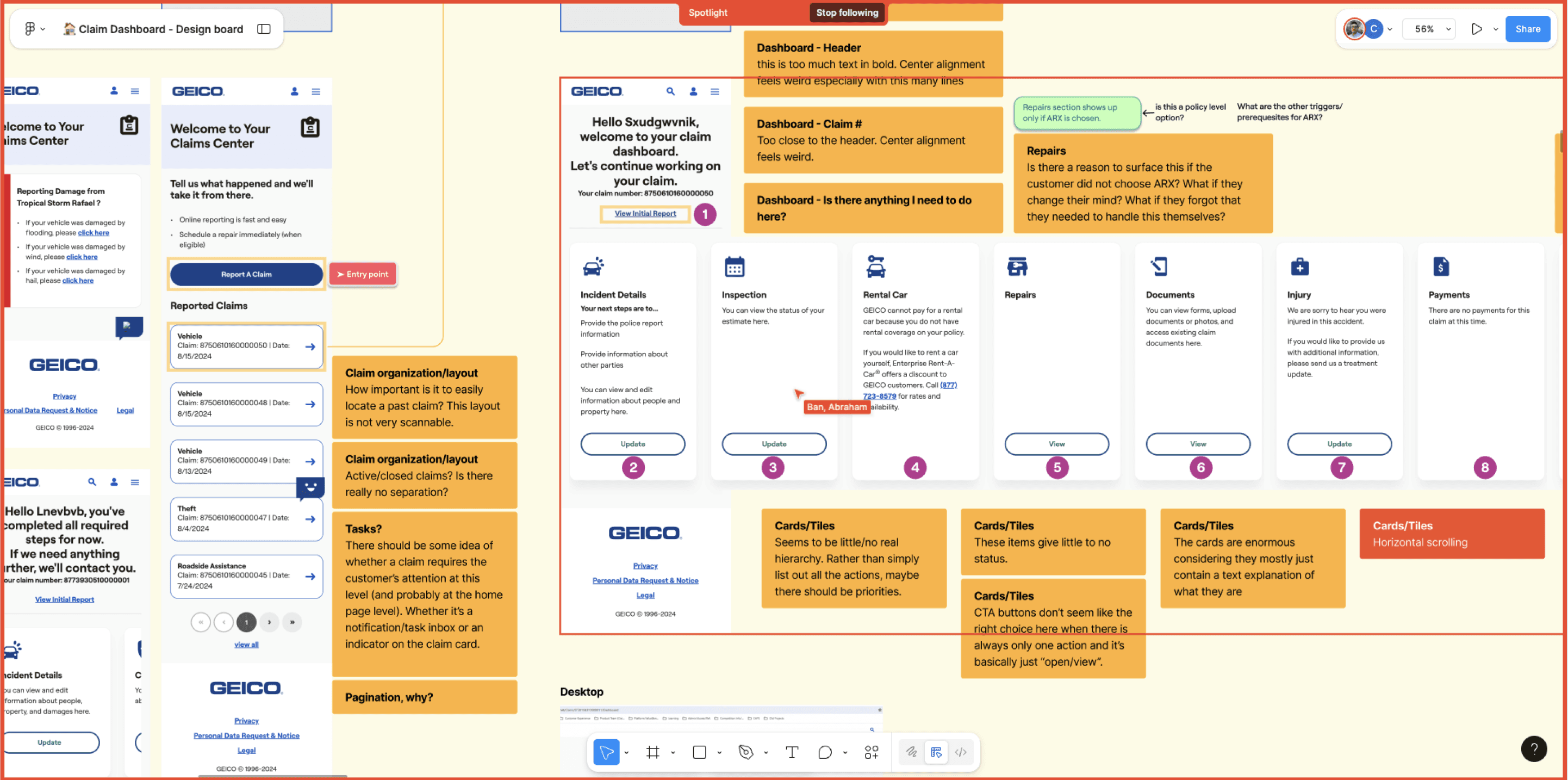
Findings from FNOL prototype testing with 10 users who had experienced mild to severe injuries while reporting a claim.
The FNOL doesn’t match the customer’s state-of-mind after an accident. Participants remarked that, while the FNOL flow was thorough and helpful, it didn’t align with their state of mind if they were expected to fill this out after an accident occurred. One participant mentioned that, having developed a concussion after an airbag deployed, she was barely able to provide or understand the information being shared with her.

Findings: The FNOL There’s no clear indication of how a customer can review what they submitted. Some participants mentioned that it wasn’t clear at the “What’s Next” page how they would be able to review or get a copy of the information they had just sent. They wanted to be able to have a record of the information they had provided and know exactly how to access it if they needed to.
Reassurance can help prevent calls to associates. A couple of participants mentioned wanting to have some way of knowing they were following the process and filling out the information correctly and completely. Some suggested having an AI or chatbot that can provide feedback or answer questions as they completed the flow. Others mentioned having indicators of when certain questions would be asked would also help alleviate this concern of if they were filling out the claim information correctly.
Collaboration
WORKSHOP
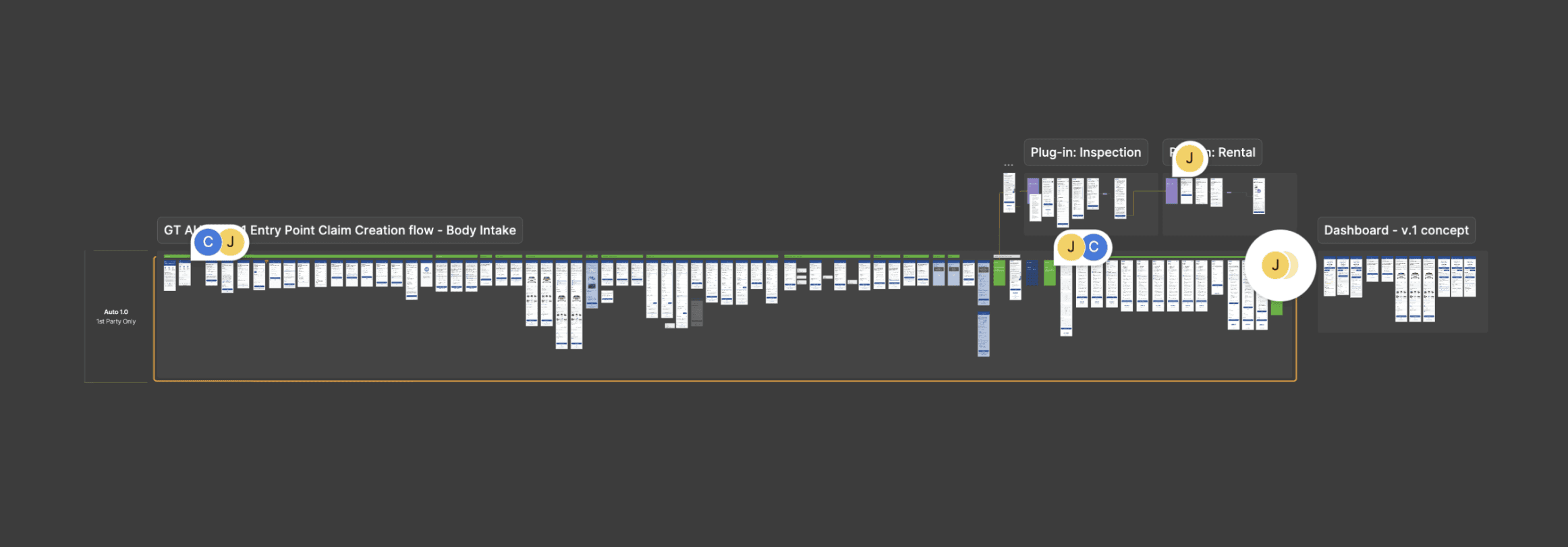
Alongside the product work, I partnered with the Design Manager to establish a collaboration framework that brought business partners and developers into a more effective, low-friction design process. The approach focused on improving team dynamics and rebuilding alignment, using Figma-based working sessions and structured design jams to accelerate decision-making and shared ownership across teams.

THE FLOW
Insights
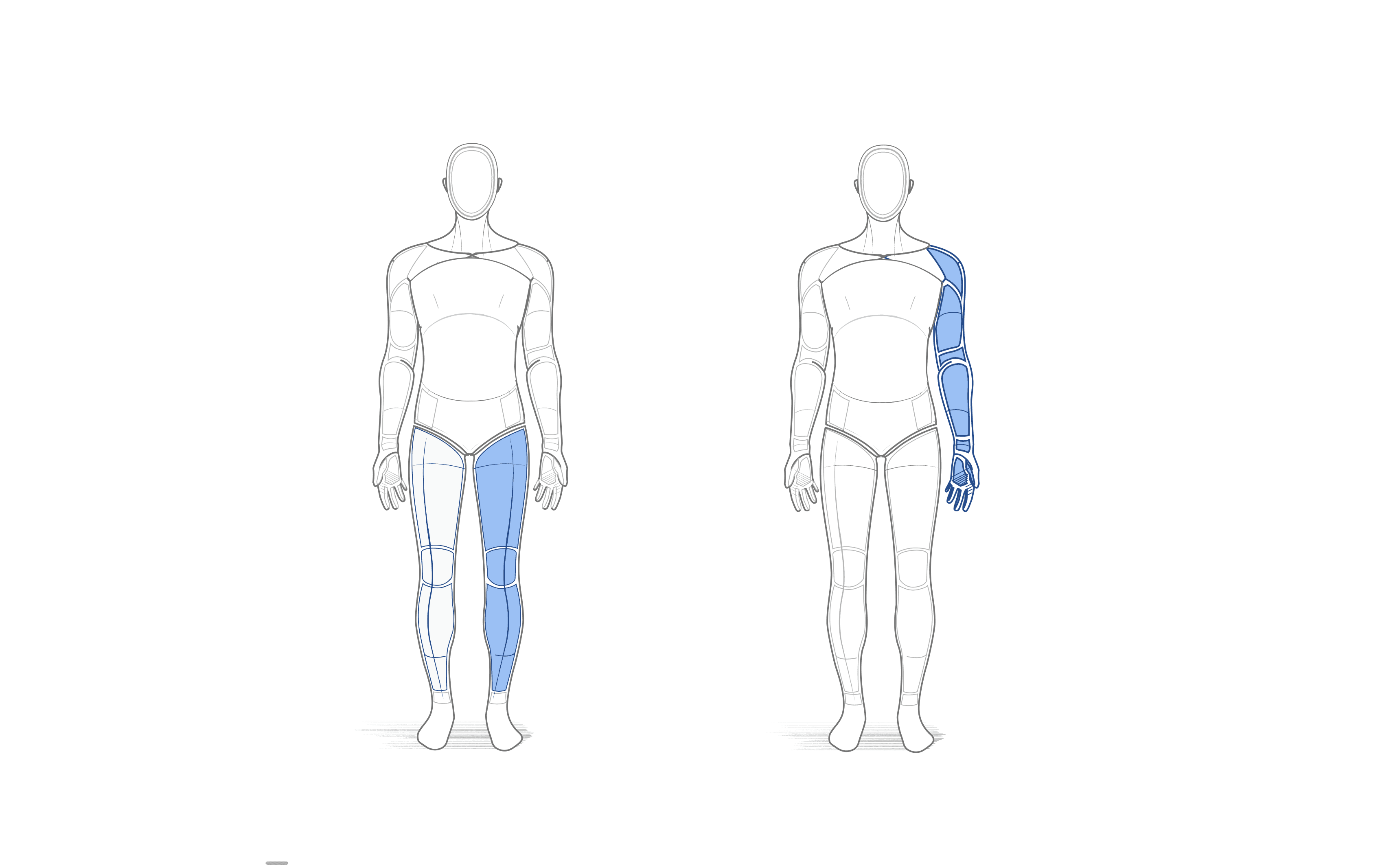
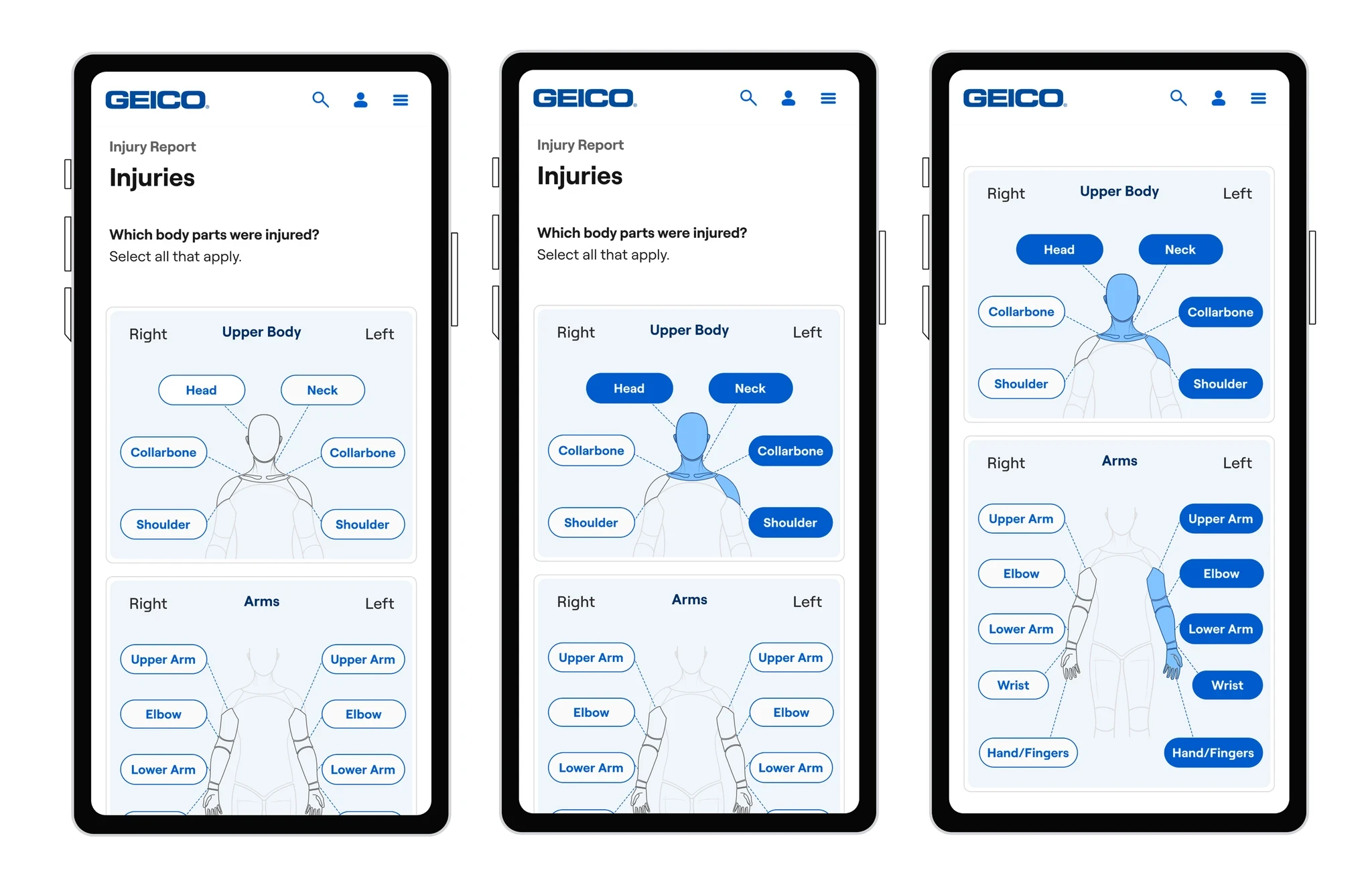
This flow is an AI-assisted injury intake experience for an insurance claims platform, designed to help users document physical injuries after an accident in a structured and emotionally simplified way.

THE RESULTS
Insights
The redesigned Injury Intake experience significantly improved customer engagement and claim completion during one of the most stressful moments in the claims journey. Through user research, rapid prototyping, and iterative usability testing, the experience became more intuitive, reassuring, and aligned with customers' emotional state following an accident.
The redesigned Injury Intake experience significantly improved customer engagement and claim completion during one of the most stressful moments in the claims journey. Through user research, rapid prototyping, and iterative usability testing, the experience became more intuitive, reassuring, and aligned with customers' emotional state following an accident.
The redesigned Injury Intake experience significantly improved customer engagement and claim completion during one of the most stressful moments in the claims journey. Through user research, rapid prototyping, and iterative usability testing, the experience became more intuitive, reassuring, and aligned with customers' emotional state following an accident.
Reduced abandonment and improved customer confidence through clearer progress indicators, review screens, and confirmation mechanisms.
Contributed to the filing of Patent Application P10092, helping establish one of GEICO's first AI-assisted injury intake experiences.
BE AWSOME

PRODUCT DESIGN
INJURY
INTAKE
INJURY INTAKE
INJURY
INTAKE
CLAIMS
GEICO
CLAIMS GEICO
CLAIMS
GEICO
Year :
Year :
2026
2026
Industry :
Insurance/Claims
Client :
GEICO
Project Duration :
9 Months
Summary
I built the redesign of GEICO's Injury Intake experience, a high-stress claims flow used by customers reporting injuries after an accident. The goal was to reduce friction in a complex self-reporting journey, improve confidence during claim submission, and create a clearer path for customers in a vulnerable moment. The redesign increased completion and throughput from 16,000 to 56,000+ customers.
This work combined UX strategy, prototyping, user research, and cross-functional collaboration to improve both the customer experience and internal team alignment.
The Challenge
The original injury intake flow relied on a one-question-per-page structure, requiring customers to navigate detailed, often complex injury questions at a moment of high stress and uncertainty. This led to a significant drop-off, with many users abandoning the process and defaulting to calling an adjuster.
Research Insights
Patent Applications P10092
Insights
Prototype testing with users who had experienced mild to severe injuries revealed three critical gaps:
The flow did not align with the user’s emotional and cognitive state immediately after an accident
Users lacked reassurance that they were completing the process correctly
Users needed a clearer way to review, confirm, and retain what they had submitted
Prototype Testing
Prototype Testing
Findings from FNOL prototype testing with 10 users who had experienced mild to severe injuries while reporting a claim.
The FNOL doesn’t match the customer’s state-of-mind after an accident. Participants remarked that, while the FNOL flow was thorough and helpful, it didn’t align with their state of mind if they were expected to fill this out after an accident occurred. One participant mentioned that, having developed a concussion after an airbag deployed, she was barely able to provide or understand the information being shared with her.
Findings: The FNOL There’s no clear indication of how a customer can review what they submitted. Some participants mentioned that it wasn’t clear at the “What’s Next” page how they would be able to review or get a copy of the information they had just sent. They wanted to be able to have a record of the information they had provided and know exactly how to access it if they needed to.
Reassurance can help prevent calls to associates. A couple of participants mentioned wanting to have some way of knowing they were following the process and filling out the information correctly and completely. Some suggested having an AI or chatbot that can provide feedback or answer questions as they completed the flow. Others mentioned having indicators of when certain questions would be asked would also help alleviate this concern of if they were filling out the claim information correctly.
Collaboration
WORKSHOP
Alongside the product work, I partnered with the Design Manager to establish a collaboration framework that brought business partners and developers into a more effective, low-friction design process. The approach focused on improving team dynamics and rebuilding alignment, using Figma-based working sessions and structured design jams to accelerate decision-making and shared ownership across teams.
THE FLOW
Insights
This flow is an AI-assisted injury intake experience for an insurance claims platform, designed to help users document physical injuries after an accident in a structured and emotionally simplified way.
THE RESULTS
Insights
The redesigned Injury Intake experience significantly improved customer engagement and claim completion during one of the most stressful moments in the claims journey. Through user research, rapid prototyping, and iterative usability testing, the experience became more intuitive, reassuring, and aligned with customers' emotional state following an accident.
The redesigned Injury Intake experience significantly improved customer engagement and claim completion during one of the most stressful moments in the claims journey. Through user research, rapid prototyping, and iterative usability testing, the experience became more intuitive, reassuring, and aligned with customers' emotional state following an accident.
The redesigned Injury Intake experience significantly improved customer engagement and claim completion during one of the most stressful moments in the claims journey. Through user research, rapid prototyping, and iterative usability testing, the experience became more intuitive, reassuring, and aligned with customers' emotional state following an accident.
Reduced abandonment and improved customer confidence through clearer progress indicators, review screens, and confirmation mechanisms.
Contributed to the filing of Patent Application P10092, helping establish one of GEICO's first AI-assisted injury intake experiences.
BE AWSOME
PRODUCT DESIGN
INJURY
INTAKE
INJURY INTAKE
INJURY
INTAKE
CLAIMS
GEICO
CLAIMS GEICO
CLAIMS
GEICO
Year :
Year :
2026
2026
Industry :
Insurance/Claims
Client :
GEICO
Project Duration :
9 Months
Summary
I built the redesign of GEICO's Injury Intake experience, a high-stress claims flow used by customers reporting injuries after an accident. The goal was to reduce friction in a complex self-reporting journey, improve confidence during claim submission, and create a clearer path for customers in a vulnerable moment. The redesign increased completion and throughput from 16,000 to 56,000+ customers.
This work combined UX strategy, prototyping, user research, and cross-functional collaboration to improve both the customer experience and internal team alignment.
The Challenge
The original injury intake flow relied on a one-question-per-page structure, requiring customers to navigate detailed, often complex injury questions at a moment of high stress and uncertainty. This led to a significant drop-off, with many users abandoning the process and defaulting to calling an adjuster.
Research Insights
Patent Applications P10092
Insights
Prototype testing with users who had experienced mild to severe injuries revealed three critical gaps:
The flow did not align with the user’s emotional and cognitive state immediately after an accident
Users lacked reassurance that they were completing the process correctly
Users needed a clearer way to review, confirm, and retain what they had submitted
Prototype Testing
Prototype Testing
Findings from FNOL prototype testing with 10 users who had experienced mild to severe injuries while reporting a claim.
The FNOL doesn’t match the customer’s state-of-mind after an accident. Participants remarked that, while the FNOL flow was thorough and helpful, it didn’t align with their state of mind if they were expected to fill this out after an accident occurred. One participant mentioned that, having developed a concussion after an airbag deployed, she was barely able to provide or understand the information being shared with her.
Findings: The FNOL There’s no clear indication of how a customer can review what they submitted. Some participants mentioned that it wasn’t clear at the “What’s Next” page how they would be able to review or get a copy of the information they had just sent. They wanted to be able to have a record of the information they had provided and know exactly how to access it if they needed to.
Reassurance can help prevent calls to associates. A couple of participants mentioned wanting to have some way of knowing they were following the process and filling out the information correctly and completely. Some suggested having an AI or chatbot that can provide feedback or answer questions as they completed the flow. Others mentioned having indicators of when certain questions would be asked would also help alleviate this concern of if they were filling out the claim information correctly.
Collaboration
WORKSHOP
Alongside the product work, I partnered with the Design Manager to establish a collaboration framework that brought business partners and developers into a more effective, low-friction design process. The approach focused on improving team dynamics and rebuilding alignment, using Figma-based working sessions and structured design jams to accelerate decision-making and shared ownership across teams.
THE FLOW
Insights
This flow is an AI-assisted injury intake experience for an insurance claims platform, designed to help users document physical injuries after an accident in a structured and emotionally simplified way.
THE RESULTS
Insights
The redesigned Injury Intake experience significantly improved customer engagement and claim completion during one of the most stressful moments in the claims journey. Through user research, rapid prototyping, and iterative usability testing, the experience became more intuitive, reassuring, and aligned with customers' emotional state following an accident.
The redesigned Injury Intake experience significantly improved customer engagement and claim completion during one of the most stressful moments in the claims journey. Through user research, rapid prototyping, and iterative usability testing, the experience became more intuitive, reassuring, and aligned with customers' emotional state following an accident.
The redesigned Injury Intake experience significantly improved customer engagement and claim completion during one of the most stressful moments in the claims journey. Through user research, rapid prototyping, and iterative usability testing, the experience became more intuitive, reassuring, and aligned with customers' emotional state following an accident.
Reduced abandonment and improved customer confidence through clearer progress indicators, review screens, and confirmation mechanisms.
Contributed to the filing of Patent Application P10092, helping establish one of GEICO's first AI-assisted injury intake experiences.